
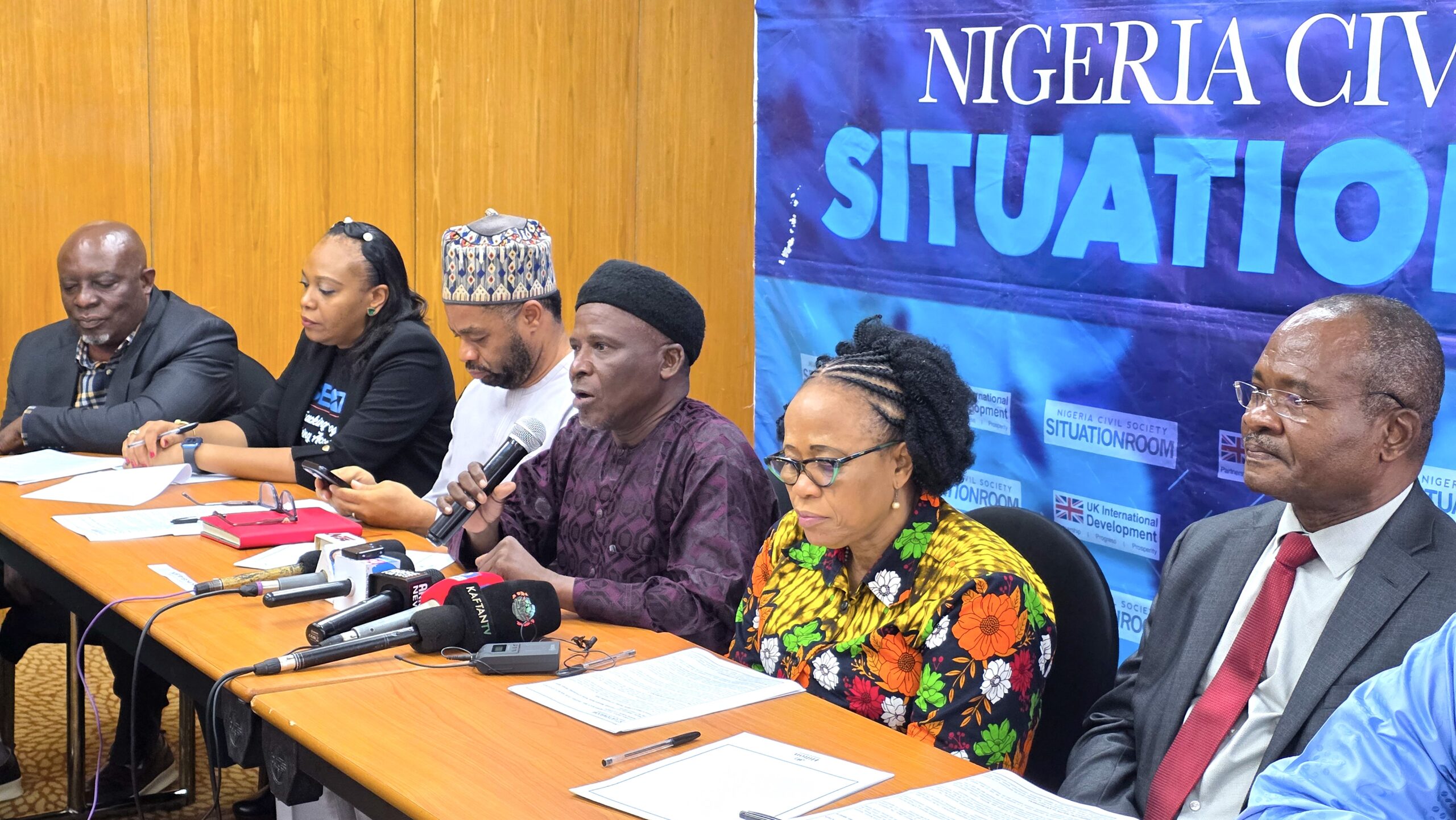
Nigeria’s Democracy at a Crossroads: Situation Room Warns of Escalating Threats Ahead of the 2027 General Elections
– Issued in Abuja, Tuesday, 15th September 2026 @ 12:30pm
As the world commemorates the International Day of Democracy, the Nigeria Civil Society Situation Room calls attention to the grave challenges confronting Nigeria’s democratic process. Rising voter intimidation, inflammatory political rhetoric, electoral violence, abuse of public office, and the apparent failure of institutions to hold powerful political actors accountable are posing serious threats to the integrity of Nigeria’s democracy.
With the 2027 General Elections approaching, Nigeria is entering a decisive phase. The credibility of those elections will not be determined by election day alone. It will depend on the political environment, the conduct of political actors, the preparedness and independence of democratic institutions, and the safeguards put in place in the months leading to the elections.
THE STATE OF NIGERIA’S DEMOCRACY
Recent public opinion surveys and international governance assessments present a sobering picture of the state of democracy and governance in Nigeria. Afrobarometer reports that 77% of Nigerians are dissatisfied with the way democracy is working, while trust in critical democratic institutions remains exceptionally low, including only 23% trust in INEC.
Yet these figures do not indicate that Nigerians have abandoned democracy. On the contrary, 64% of Nigerians continue to say that democracy is preferable to any other form of government. The message is therefore clear: Nigeria does not face a crisis of citizens’ desire for democracy as much as a crisis of democratic delivery, institutional trust and accountability.
This democratic legitimacy gap is reinforced by international governance assessments. The V-Dem Institute classifies Nigeria as an Electoral Autocracy, reflecting serious concerns about the quality of political competition, institutional checks and democratic freedoms. Similarly, the Mo Ibrahim Index of African Governance ranked Nigeria 33rd out of 54 African countries in its 2024 Index, down from 30th previously, pointing to a deterioration in the country’s overall governance trajectory.
Taken together, these findings demonstrate a widening gap between citizens’ expectations of democracy and their experience of it. Nigerians continue to value democratic government, but many are increasingly dissatisfied with its performance, distrust institutions expected to protect their rights, and experience weaknesses in accountability, representation, electoral integrity and the rule of law.
Democracy is not sustained by elections alone. It is sustained by the rule of law, respect for fundamental rights, accountable institutions, political tolerance, and the freedom of citizens to make choices without fear or coercion.
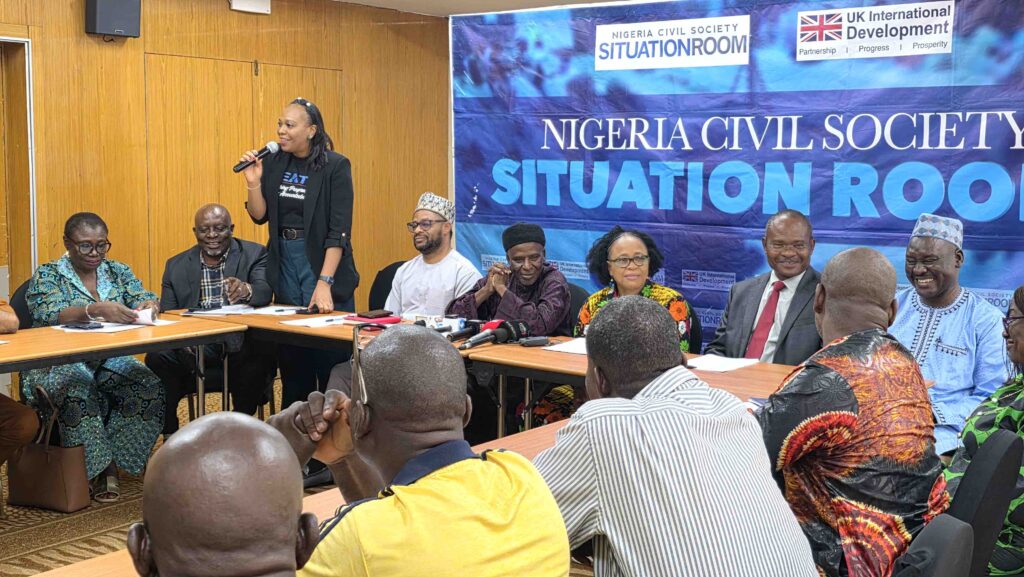
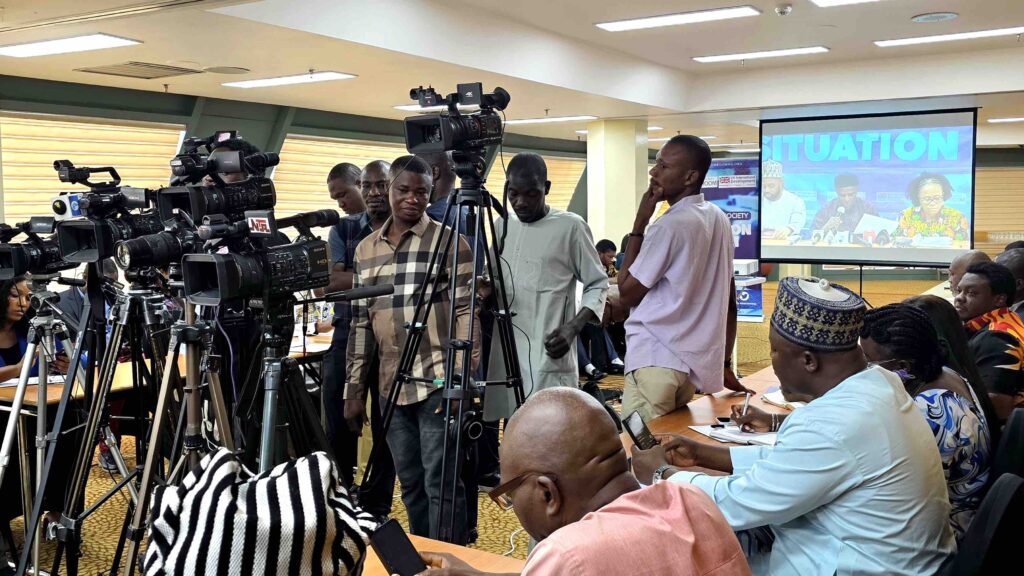
A DETERIORATING POLITICAL ENVIRONMENT
Against this backdrop, the Situation Room is deeply concerned about the deterioration of the political environment in recent months. Political rhetoric has become increasingly hostile, while threats, intimidation and violence are being used to suppress opposition, constrain political participation and undermine citizens’ fundamental freedoms.
The recently concluded Osun State Governorship Election also raised serious concerns regarding intimidation and violence, including reports of threats and coercion involving high-ranking political officeholders. When individuals entrusted with public authority become associated with conduct that undermines democratic participation, the consequences extend beyond individual incidents. They erode confidence in the political system itself.
The Situation Room highlights six critical threats requiring urgent action:
- Institutional failure and a culture of impunity
Institutions charged with protecting Nigeria’s democracy–including INEC, security agencies, prosecutorial authorities and the Judiciary–must demonstrate greater independence, urgency and effectiveness in responding to violations. Where allegations of electoral offences, incitement, intimidation or violence involving politically influential individuals are met with delayed, superficial or inconclusive responses, a culture of impunity takes root. A democracy cannot survive where the powerful are permitted to violate the rules with impunity while ordinary citizens bear the consequences. Credible allegations must be investigated impartially, transparently and expeditiously. Where wrongdoing is established, the law must be applied without fear or favor.
- Voter intimidation and inflammatory political rhetoric
The Situation Room is alarmed by threats directed at citizens because of their political choices, including threats of physical harm, loss of livelihood, displacement or other forms of reprisal.
No citizen should have to choose between exercising a constitutional right and securing their personal safety, livelihood or place of residence. Political leaders have a heightened responsibility to promote tolerance, peaceful participation and respect for citizens’ choices.
- Forced disenfranchisement and threats of displacement
The Situation Room condemns reports of directives threatening citizens to “vote APC or leave the community.” Such conduct, if established, represents a grave assault on citizens’ constitutional rights and freedoms.
The freedom of movement, the right to reside anywhere in Nigeria and the right to participate in political life cannot be made conditional on political allegiance.
The right to vote belongs to the citizen. It is not a privilege granted by a political party, local government chairman, governor or any other public official.
The Situation Room calls for prompt and impartial investigation of such allegations and appropriate sanctions where violations are established.
- Weaponisation of public office
Reports of threats to remove elected local government officials unless they deliver electoral victories for particular political interests are deeply disturbing.
Government appointments, removals, administrative powers and public resources must never be deployed to compel political loyalty or secure electoral advantage. Public office is a responsibility to serve citizens—not an instrument for political control.
- Weaponisation of ethnicity and religion
The increasing use of ethnic and religious identity as instruments of political mobilization poses a serious threat to national cohesion and democratic participation.
Elections must be contests of ideas, policies, competence and public accountability–not struggles for demographic dominance or exclusion. Political leaders, religious and traditional authorities, the media and other influential voices must promote peaceful coexistence, inclusion and respect for the equal citizenship of all Nigerians.
- Political thuggery, obstruction and voter suppression
Reports of political thuggery, attacks on political opponents, obstruction of candidates and intimidation of citizens raise serious questions about the impartiality and effectiveness of security arrangements. No candidate should be prevented from campaigning, and no citizen should be intimidated or attacked because of political affiliation. Security agencies must protect all political actors and citizens equally, regardless of party, status or influence.
THE ROAD TO 2027: A NATIONAL CALL TO ACTION
Nigeria cannot afford to approach the 2027 General Elections as business as usual. The credibility of an election is built long before the first ballot is cast. It depends on whether citizens are free to participate, campaign, vote and express their political preferences without intimidation; whether institutions enforce the law impartially; and whether political actors accept that electoral victory must be earned through persuasion–not coercion. Nigeria needs elections that are not merely conducted, but elections whose processes and outcomes citizens can trust.
The Nigeria Civil Society Situation Room therefore calls for the following urgent actions:
- Enforce electoral laws and prosecute violations
INEC, the Nigeria Police Force, the Department of State Services and other relevant law-enforcement authorities must enforce the applicable provisions of the Electoral Act 2026 impartially and decisively. Incitement to violence, threats against voters, voter suppression and obstruction of lawful political participation must attract appropriate investigation and sanctions. Relevant provisions of the electoral laws, including provisions addressing political campaigns, intimidation and electoral offences, must be applied without fear or favor. No offender should be shielded by political office, party affiliation or influence.
- Guarantee the neutrality of public institutions
The Federal and State Governments must guarantee a level playing field for all political parties, candidates and citizens. Public institutions, security agencies and public resources must not be deployed to advantage incumbent political interests or disadvantage opposition parties and candidates. State institutions belong to the Nigerian people. Their powers must be exercised lawfully, transparently and impartially.
- Protect fundamental rights and civic freedoms
All authorities must protect citizens’ rights to freedom of movement, peaceful assembly, association, expression and political participation. No Nigerian should face violence, displacement, loss of livelihood or exclusion for exercising a constitutional right.
- Hold political parties and leaders accountable
Political parties and political leaders must publicly reject intimidation, political violence, hate speech and the weaponisation of ethnicity and religion. Parties must hold their members and supporters accountable and commit to peaceful campaigns, issue-based political engagement, internal democracy and respect for credible electoral outcomes.
- Strengthen institutional accountability and electoral preparedness
INEC, security agencies, the Judiciary and other relevant institutions must demonstrate measurable preparedness for the 2027 elections. This must include timely and transparent electoral preparations, effective mechanisms for reporting and addressing violations, impartial enforcement of electoral laws and meaningful accountability for misconduct.
CIVIL SOCIETY’S COMMITMENT
The Nigeria Civil Society Situation Room will not be a bystander as Nigeria approaches the 2027 General Elections. Situation Room will intensify monitoring of the political and electoral environment and work with citizens, civil society organisations, democratic institutions, the media and other stakeholders to identify emerging threats and bring them to public attention.
Our monitoring and advocacy will focus particularly on:
- Electoral preparedness and institutional performance;
- Political party commitments and the conduct of political actors;
- Campaign financing and abuse of public resources;
- Electoral violence, intimidation and hate speech;
- Misinformation and disinformation;
- Citizen participation and protection of civic freedoms; and
- The independence, impartiality and accountability of institutions responsible for the electoral
We will continue to provide citizens with credible information, promote public dialogue and demand accountability from those entrusted with public authority.
CONCLUSION: DEMOCRACY REQUIRES ACTION
On this International Day of Democracy, we are not merely commemorating democracy. We are issuing a national call to action. Democracy is not a gift bestowed by political leaders. It is a right belonging to the people and a system of government that must be protected, strengthened and renewed through responsible institutions and active citizenship.
The 2027 General Elections must not become another exercise in the ritual conduct of elections without the substance of democratic choice. They must represent a measurable improvement in the quality, credibility, transparency and inclusiveness of Nigeria’s electoral process. We call on political leaders, public officials, electoral institutions, security agencies, the Judiciary, political parties, the media, civil society and citizens to make clear and measurable commitments to protect Nigeria’s democracy.
Nigeria deserves elections that citizens can trust.
Nigeria deserves political leaders who respect the people’s mandate.
Nigeria deserves institutions that protect democracy, not partisan political interests.
And Nigerians must demand nothing less.
The road to 2027 starts now.
The responsibility to protect Nigeria’s democracy belongs to all of us.
SIGNED:
Yunusa Z. Ya’u
Convener, Nigeria Civil Society Situation Room
Mma Odi
Co-Convener, Nigeria Civil Society Situation Room
Celestine Odo
Co-Convener, Nigeria Civil Society Situation Room
———————-
Contact information:
Call/WhatsApp: 09032999919, 09095050505.
E-mail: situationroom@placng.org
Social Media: @Situationroomng
Website: www.situationroomng.org